E-Bike E-Scooter E-Motorcycle Charging Connector Manufacturing and Solution Provider

The charging connectors for E-bikes, E-scooters, and E-motorcycles vary significantly based on power requirements, regional standards, and manufacturer designs.
Here's a detailed breakdown:
1. E-Bikes
- China: The GB 42296-2022 standard (effective July 2023) mandates unified charging interfaces. Lead-acid batteries use 2+2 pin connectors (2 power, 2 communication), while lithium-ion batteries adopt 2+4 pin connectors (2 power, 4 communication) to prevent misuse .
- Europe/North America: No strict unified standard, but common connectors include Anderson Power Pole, XT60/XT90, and DC barrel connectors. Proprietary solutions (e.g., Bosch, Shimano) are prevalent, often with safety certifications like UL or CE .
- AC Charging: Most e-bikes use 36–55V AC chargers with 2–4A current, taking 4–6 hours for a full charge. Fast chargers (4–8A) reduce time to 1–3 hours .
- The U.S. CPSC warns against "universal" chargers due to fire risks. Only use manufacturer-approved chargers with proper communication protocols to avoid overheating .
2. E-Scooters
Connector Types:
- Similar to e-bikes, e-scooters often use DC barrel connectors or proprietary designs. For example, Segway and Bird typically use custom connectors to ensure compatibility with their battery systems .
Wireless Charging:
- Emerging solutions like MobiDock enable inductive charging via docking stations, reducing clutter and improving urban mobility. However, this technology is not yet widespread .
Regulatory Focus:
- Europe and North America prioritize usage regulations (speed limits, age restrictions) over charging standards. Connectors must comply with local electrical safety norms (e.g., CE, UL) .
3. E-Motorcycles
- High-Power Standards:
CCS (Combined Charging System): Dominates in Europe and North America, supporting both AC and DC fast charging. Brands like Energica offer dual CCS/CHAdeMO compatibility for global markets .
CHAdeMO: Common in Japan and some Asian markets, though its adoption is declining. Energica’s 2021 models integrated CHAdeMO for Japanese entry .
Proprietary Solutions: High-current connectors (e.g., FPIC’s 40A and 60A models with IP67 waterproofing) are used for DC fast charging, supporting 400V+ systems .
- Regional Innovations:
India’s ISI7017: A new standard combining AC/DC charging for lightweight EVs, including e-motorcycles, to enhance interoperability .
China’s GB/T: Mandates a unified DC charging interface (GB/T 20234) for public infrastructure, though some manufacturers still use proprietary connectors .
4. Key Considerations
- E-bikes/scooters often require brand-specific chargers due to varying voltage/current needs. E-motorcycles increasingly adopt open standards (CCS, CHAdeMO) for public charging .
- Adapters may be needed for cross-region use (e.g., Type 2 to GB/T), but safety certifications are critical .
- Unified Standards: China’s GB 42296-2022 and India’s ISI7017 signal a shift toward harmonization. The EU’s upcoming Plug & Charge initiative aims to standardize payment and communication protocols .
- High-Power Charging: E-motorcycles are moving toward 100A+ connectors (e.g., FPIC’s 60A model) to support faster charging times .
In summary, e-bikes and e-scooters rely on region-specific or proprietary connectors, while e-motorcycles increasingly adopt open standards like CCS. Users should prioritize certified chargers and check compatibility with local infrastructure to ensure safety and efficiency.
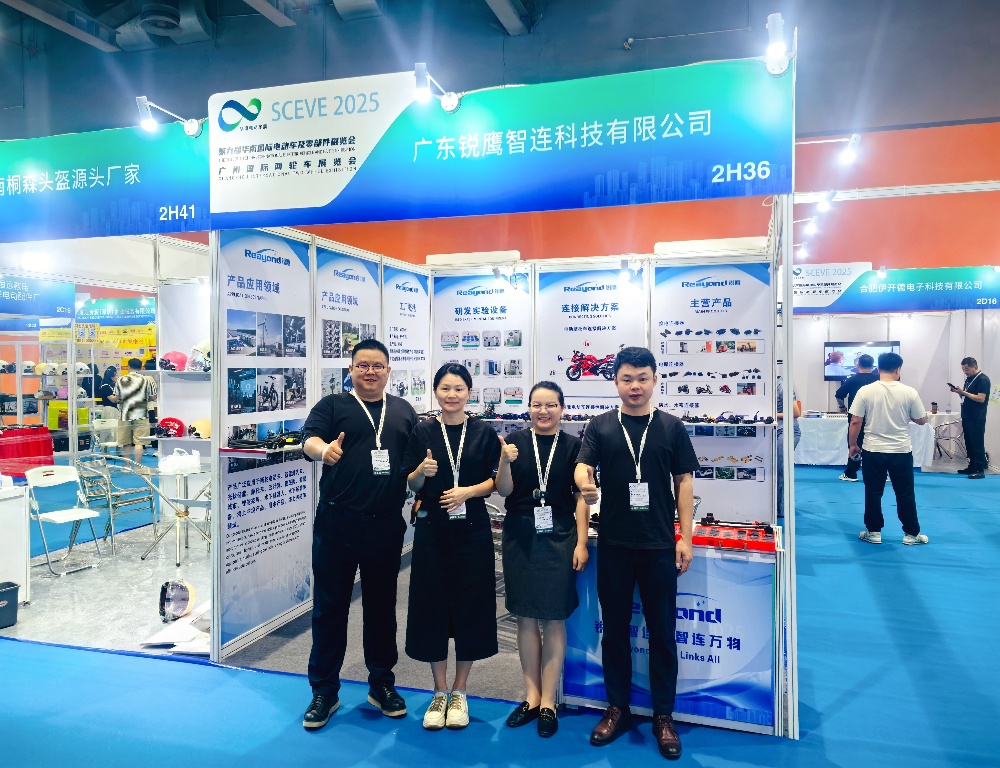
Reayondlink is focusing on E-bike,E-scooter,E-motorcycle Charging Connectors R&D and manufacturing for customers all over the world.
If you need customized charging port or charging connector, we are professional to provide E-bike,E-scooter,E-motorcycle Charging Connector Solution and manufacturing.
Reayondlink China Factory for E-Bike Charging Connectors